Full Cardiac Risk

A DNA blood test analysing 174 genes linked to inherited heart conditions such as cardiomyopathies, arrhythmias and lipid disorders, for people wanting to understand their genetic predisposition to cardiac disease.

  • Doctor reviewed
Sample
Blood
Collection
Venous draw at clinic
Results in
42 days
Biomarkers
174
Doctor reviewed
Yes
Tests for
  • APOA5
  • APOE
  • CBS
  • CETP
  • ABCC9
  • ABCG5
  • ABCG8
  • ACTA1
  • ACTA2
  • ACTC1
  • ACTN2
  • AKAP9
  • +48 more

Test specifications

Sample type
blood
Collection method
venous draw at clinic
Turnaround time
42 days
Biomarkers tested
174
At-home test
No
Doctor reviewed
Yes
Gender focus
Both

What's tested

60 biomarkers as listed by Randox Health, of 174 in total.

Nutrition

  • APOA5
  • APOE
  • CBS
  • CETP
  • ABCC9
  • ABCG5
  • ABCG8
  • ACTA1
  • ACTA2
  • ACTC1
  • ACTN2
  • AKAP9
  • ALMS1
  • ANK2
  • ANKRD1
  • APOA4
  • APOB
  • APOC2
  • BAG3
  • BRAF
  • CACNA1C
  • CACNA2D1
  • CACNB2
  • CALM1
  • CALR3
  • CASQ2
  • CAV3
  • CBL
  • COL3A1
  • COL5A1
  • COL5A2
  • COX15
  • CREB3L3
  • CRELD1
  • CRYAB
  • CSRP3
  • CTF1
  • DES
  • DMD
  • DNAJC19
  • DOLK
  • DPP6
  • DSC2
  • DSG2
  • DSP
  • DTNA
  • EFEMP2
  • ELN
  • EMD
  • EYA4
  • FBN1
  • FBN2
  • FHL1
  • FHL2
  • FKRP
  • FKTN
  • FXN
  • GAA
  • GATAD1
  • GCKR

About this test

The Full Cardiac Risk test analyses 174 genes associated with inherited cardiac conditions, including cardiomyopathies, arrhythmias, arteriopathies and lipid disorders. Genetic testing of this kind is commonly used to assess your inherited predisposition to these conditions, which can inform decisions such as further health checks or lifestyle changes discussed with a healthcare professional; it does not diagnose a cardiac condition.

With 174 biomarkers, this places in the highest bracket of heart health tests we track for clinical depth, reflecting the scale of the genetic panel involved. The listing also scores well for clarity and documentation, as Randox Health publishes a detailed description, the full list of genes tested, a stated turnaround and the sample type, though it does not describe what the results report looks like.

The test requires a venous blood draw at a clinic rather than an at-home kit, and results take around 42 days, which is why it scores low for collection convenience. At £887 there are no comparable tests in our data to benchmark the price against, so this figure should be judged on the depth of testing on offer rather than against a like-for-like alternative. Trust signals score highly, reflecting Randox Health's Trustpilot rating of 4.6 from 29,705 reviews, its UKAS ISO 15189 accredited lab and CQC registration, and results are reviewed by a doctor, with a genetic counsellor consultation arranged within 6 weeks to discuss them.

Who is it for?

This is aimed at people who want a detailed genetic picture of their inherited risk for cardiomyopathies, arrhythmias, arteriopathies and lipid disorders, and who are comfortable attending a clinic for a blood draw and waiting around 42 days for results plus a genetic counsellor consultation. It suits those with a family history of cardiac conditions who want a broad genetic panel rather than a quick screening test.

If you want a faster or lower-cost heart health check rather than a genetic risk panel, or prefer an at-home collection, this is unlikely to be the right starting point; the fact sheet has no comparable genetic cardiac panels listed to weigh against it.

How it works

A doctor or nurse takes a venous blood sample at a Randox Health clinic, which is sent for DNA analysis of 174 genes. Results take around 42 days and are reviewed by a doctor, and the provider states it will contact you within 6 weeks to arrange a consultation with a genetic counsellor to discuss your results.

Pros & cons

Pros

  • Analyses 174 genes, one of the broadest genetic panels for heart health we track.
  • Results are reviewed by a doctor rather than provided as raw data.
  • Includes a genetic counsellor consultation to discuss your results.
  • Listing publishes the full list of 174 genes tested.

Cons

  • Requires a venous blood draw at a clinic, not an at-home kit.
  • Results take around 42 days, one of the slower turnarounds on the site.
  • At £887, with no comparable tests yet in our data to check the price against.
  • Provider does not describe what the results report looks like.

Our editorial score

Compare Health Test Score 174-gene inherited cardiac risk panel, doctor reviewed
Editorial confidence: 10.0/10

This DNA test analyses 174 genes linked to inherited cardiomyopathies, arrhythmias, arteriopathies and lipid disorders from a blood sample taken at a clinic. At £887 it is one of the more specialised and expensive tests on the site, with results taking around 42 days and a genetic counsellor consultation to discuss them. There are currently no directly comparable tests in our data to benchmark the price against.

Score breakdown

  • Clarity and documentation 9.0/10

    The listing publishes a detailed description, the full biomarker list, a stated turnaround, clear collection options, the sample type; it does not state what the report looks like.

  • Clinical depth 10.0/10

    174 biomarkers, placing it in the 100th percentile of heart health tests we track.

  • Collection convenience 3.0/10

    Requires a venous draw at a clinic; results in around 42 days, slower than similar tests.

  • Results and follow-up 7.0/10

    Results are reviewed by a doctor; the provider does not describe the report format.

  • Trust signals 9.0/10

    Trustpilot 4.6 from 29,705 reviews; accredited lab (UKAS ISO 15189 (Randox Clinical Laboratory Services, lab 9329)); CQC registered.

  • Value for money 6.0/10

    £887.00; no comparable tests to benchmark against yet.

Calculated 13 September 2026 from the facts we hold about this test and provider, using our published scoring formula. Scores are not hand-edited.

View all →

Cardiovascular health blood test

Broad 21-marker check across heart, liver and kidneys

A 21-marker blood test covering cholesterol and apolipoproteins, blood sugar, inflammation, liver and kidney health. It suits anyone wanting a fuller cardiovascular risk picture than standard cholesterol alone.

  • At-home test
8.6 / 10

Cholesterol (Lipid profile)

Ties for the most markers in its group, priced mid-pack

A seven-marker lipid profile covering total, HDL, LDL and non-HDL cholesterol plus triglycerides. It suits anyone monitoring their cholesterol as part of general heart health.

  • At-home test
8.6 / 10

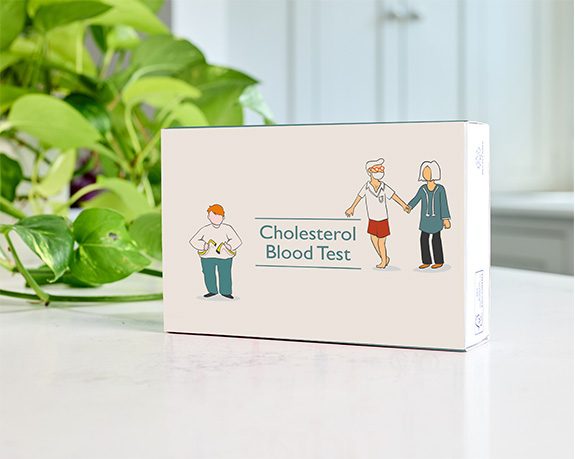
Cholesterol Blood Test

Full 7-marker lipid panel, priced above cheaper peers

A 7-marker cholesterol and lipid panel covering total, HDL, LDL and non-HDL cholesterol, triglycerides and cholesterol ratios, for anyone tracking heart disease risk factors.

  • At-home test
8.5 / 10