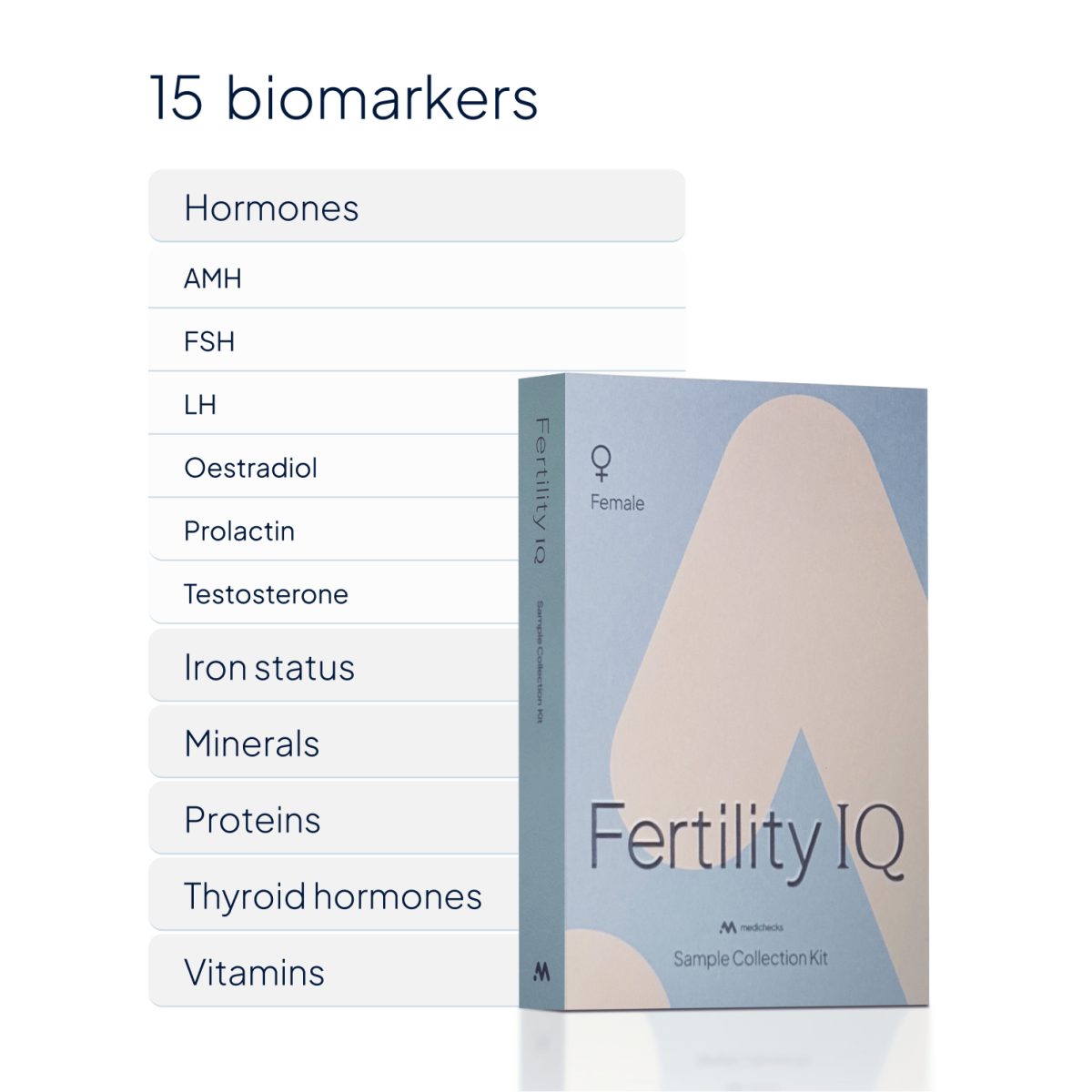
Female Fertility IQ Blood Test
Would you like to better understand your ovarian reserve and reproductive hormones?
- Doctor reviewed
- 15 biomarkers
- Results in 4 days
Would you like to better understand your ovarian reserve and reproductive hormones?
Do you suspect you have rheumatoid arthritis and want to continue your investigation? Anti-CCP levels can help establish your likelihood of rheumatoid arthritis over other types of joint pain.
Get to the root of your fatigue with the Driver's Tiredness Blood Test. This test looks at key markers that may be causing your tiredness, helping you understand what might be affecting your energy levels.
Worried about your heart health? The PLAC test measures lipoprotein-associated phospholipase A2 (Lp-PLA2), a key marker of arterial inflammation linked to heart disease and stroke risk.
Are you experiencing symptoms of a nut or seed food allergy, such as hives? Our Allergy Screen (Nuts and Seeds) Blood Test checks to see if you are allergic to 14 commonly eaten nuts and seeds, including almonds and peanuts.
Experiencing joint pain, stiffness, or swelling? This test measures rheumatoid factor (RF), an antibody that can indicate autoimmune conditions such as rheumatoid arthritis.
Growth hormone (hGH) plays a crucial role in muscle growth, metabolism, and overall development. Too much or too little can lead to issues like abnormal growth, fatigue, or changes in body composition.
Monitor your blood clotting function with precision. Important for anyone on warfarin therapy, this test measures your INR to ensure your blood-thinning medication is working at the right level.
This test checks for specific antibodies linked to autoimmune conditions, offering valuable insights into your immune system's activity.
Monitor your hormone levels with our TRT hormone monitoring profile, which includes free testosterone, oestradiol, and prolactin, to ensure your treatment stays on track.
PEth is a direct biomarker of alcohol intake, providing a reliable measure of alcohol use over the past two to four weeks.
If you're noticing thinning hair or excessive shedding, this test can help uncover potential causes. Hair loss can be linked to hormonal imbalances, nutritional deficiencies, or underlying health conditions.