Men's health blood test
One of the deepest men's health panels we track
A 21-marker blood test covering testosterone, cholesterol, liver health, inflammation and vitamin D, for men wanting a broad check on long-term health risk.
- At-home test
A 19-marker blood test covering cholesterol, blood sugar, testosterone and liver health, reviewed by a doctor, for men who want a broad routine health check.
19 biomarkers as listed by LloydsPharmacy Online Doctor.
This panel covers four areas aimed at men: testosterone (including free testosterone, SHBG and free androgen index), a 7-marker cholesterol profile, HbA1c for blood sugar and diabetes risk, and liver function markers including proteins. Testosterone naturally declines with age and can affect energy, mood and sex drive, while the cholesterol and liver markers are commonly used to assess cardiovascular and liver health.
We do not have named peer tests to compare this one against directly. Within the broader set of men's health tests we track, its 19 biomarkers place it in the 83rd percentile by depth, and its £79 price sits 30% below the £113.40 median for the 7 similarly sized tests in that set.
The score is driven up by clinical depth, given the biomarker count, and by results and follow-up, since results are reviewed by a doctor. clarity and documentation and value for money against the broader benchmark also contribute positively.
This suits men who want a broad routine health check covering testosterone, cholesterol, blood sugar and liver function, with the reassurance of a doctor reviewing the results.
We do not track named peer tests to point you to a cheaper or deeper alternative, though this provider's own General health blood test covers 18 markers without testosterone for £97, and its Weight management blood test covers 10 markers for £75.
You collect a finger-prick blood sample at home, then post it to the lab. Results are normally ready within 3 working days of the sample arriving, and a doctor reviews your results before they are released to you.
This panel covers 19 markers, including a full cholesterol profile, testosterone and liver function, for £79, with results reviewed by a doctor. We do not track named peers for this exact test, but its biomarker count places it in the 83rd percentile of men's health tests we track, and its price sits 30% below the £113.40 median for similarly sized tests in that set.
The listing publishes a detailed description, the full biomarker list, a stated turnaround, clear collection options, the sample type; it does not state what the report looks like.
19 biomarkers, placing it in the 83rd percentile of mens health tests we track.
A finger-prick sample you take at home; results in around 3 days, slower than similar tests.
Results are reviewed by a doctor; the provider does not describe the report format.
Trustpilot 4.3 from 16,453 reviews; CQC registered; doctor review as standard; trading 24+ years.
£79.00 against a median of £113.40 for the 7 similarly sized mens health tests we track (-30%).
Calculated 13 September 2026 from the facts we hold about this test and provider, using our published scoring formula. Scores are not hand-edited.
One of the deepest men's health panels we track
A 21-marker blood test covering testosterone, cholesterol, liver health, inflammation and vitamin D, for men wanting a broad check on long-term health risk.
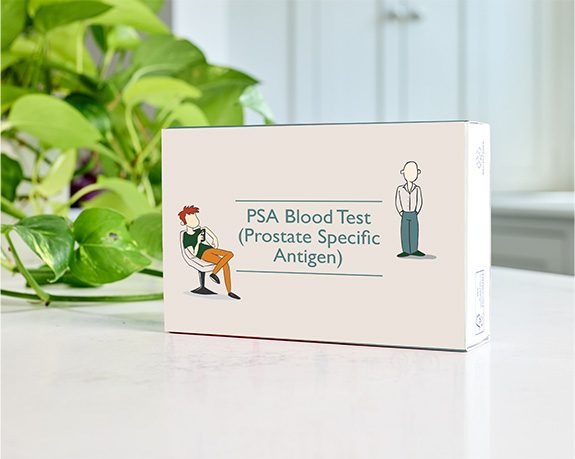
PSA test priced at the group's £59 median
A single blood test measuring prostate specific antigen (PSA), a marker commonly used to help assess prostate cancer risk. Suited to men aged 45 and over, or 40 and over if at higher risk, as part of regular monitoring.
50-marker hormone and inflammation panel for skin concerns
A 50-marker blood panel covering hormones, thyroid, inflammation, iron, liver, kidney and vitamin levels that can influence skin condition. Suited to anyone investigating persistent skin issues such as breakouts or dryness.
Cheaper than most PSA tests we track, but not the cheapest
Measures PSA, a protein produced by the prostate, commonly used to assess prostate health. Suited to those in a higher-risk group by age, ethnicity or family history.