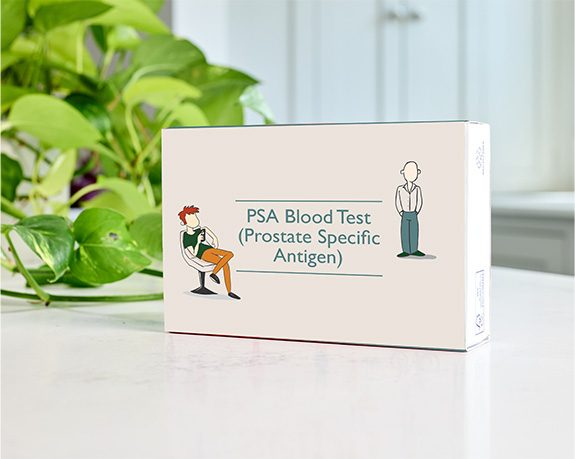
PSA Blood Test
Check your prostate specific antigen (PSA) level with our at home finger-prick blood test.
- At-home test
- Doctor reviewed
- 1 biomarkers
- Results in 1 day
8.4
/ 10
Are you over 50, over 45 and of black ethnicity, or have a strong family history of prostate cancer? Our PSA Blood Test may detect raised PSA levels, helping to identify potential signs of prostate cancer and enabling you to take early action for your health.
1 biomarker as listed by Medichecks.
Are you over 50, over 45 and of black ethnicity, or have a strong family history of prostate cancer? Our PSA Blood Test may detect raised PSA levels, helping to identify potential signs of prostate cancer and enabling you to take early action for your health.
Learn more about the pros and cons of testing PSA.
Description provided by Medichecks.
The listing publishes a short description, the full biomarker list, a stated turnaround, clear collection options, the sample type; it does not state what the report looks like.
A single-marker test measuring exactly what it sets out to; depth is not the point of this comparison group.
Can be done at home; with a venous or clinic option as well; a home nurse visit is offered; results within 2 days.
Results are reviewed by a doctor.
Trustpilot 4.5 from 2,477 reviews; accredited lab (UKAS ISO 15189 partner labs); doctor review as standard; trading 25+ years.
£45.00 against a comparison-group median of £59.00 (-24%).
This test belongs to our PSA test comparison group. See how it stacks up against equivalent tests from other providers.
Check your prostate specific antigen (PSA) level with our at home finger-prick blood test.
PSA is a marker for prostate cancer. Measure your PSA levels with our at-home blood test.
Our at-home prostate-specific antigen (PSA) blood test is suitable for men over 50, over 45 and of black ethnicity, or men who have a strong family history of prostate cancer.
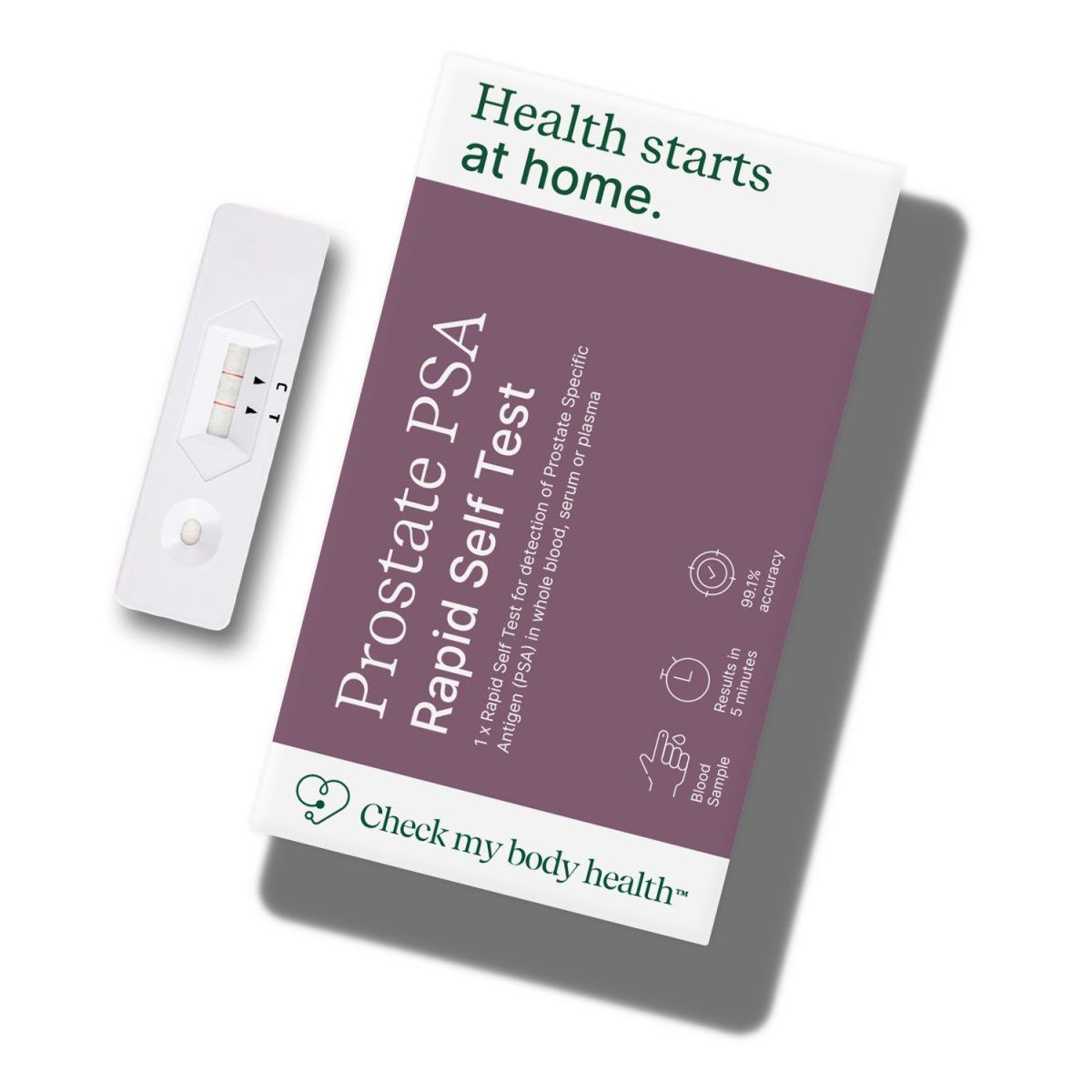
Maintaining prostate health is crucial for overall wellbeing, especially as men age. The Prostate Health Self-Test offers a proactive approach to monitoring potential issues by measuring Prostate-Specific Antigen (PSA) levels in your blood.
Our PSA test is a simple blood test that measures the level of Prostate-Specific Antigen (PSA) in your blood, providing valuable information about your PSA levels and supporting a proactive approach to prostate health.
Over 52,000 men in the UK are diagnosed with prostate cancer each year, with around 1 in 8 affected during their lifetime.
Used as a screening process for Prostate Cancer. A high total PSA level may mean there is an enlarged prostate gland. Although a rise in PSA is associated with an increased risk of prostate cancer, a number of benign (that is, not cancerous) conditions can also cause the PSA level to rise.
A check of your prostate function for men.
This test measures the Prostate Specific Antigen (PSA) levels in the blood. Raised PSA levels are linked to an increased risk of prostate cancer.
Check your prostate specific antigen (PSA) level with our at home finger-prick blood test.
Our at-home prostate-specific antigen (PSA) blood test is suitable for men over 50, over 45 and of black ethnicity, or men who have a strong family history of prostate cancer.
PSA is a marker for prostate cancer. Measure your PSA levels with our at-home blood test.
Maintaining prostate health is crucial for overall wellbeing, especially as men age. The Prostate Health Self-Test offers a proactive approach to monitoring potential issues by measuring Prostate-Specific Antigen (PSA) levels in your blood.