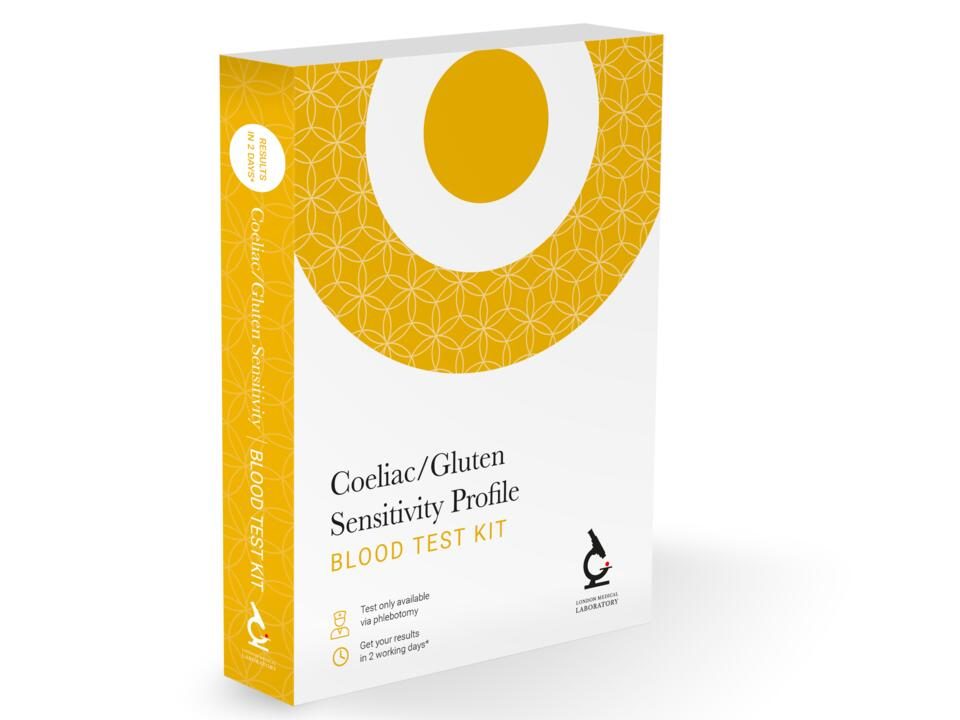
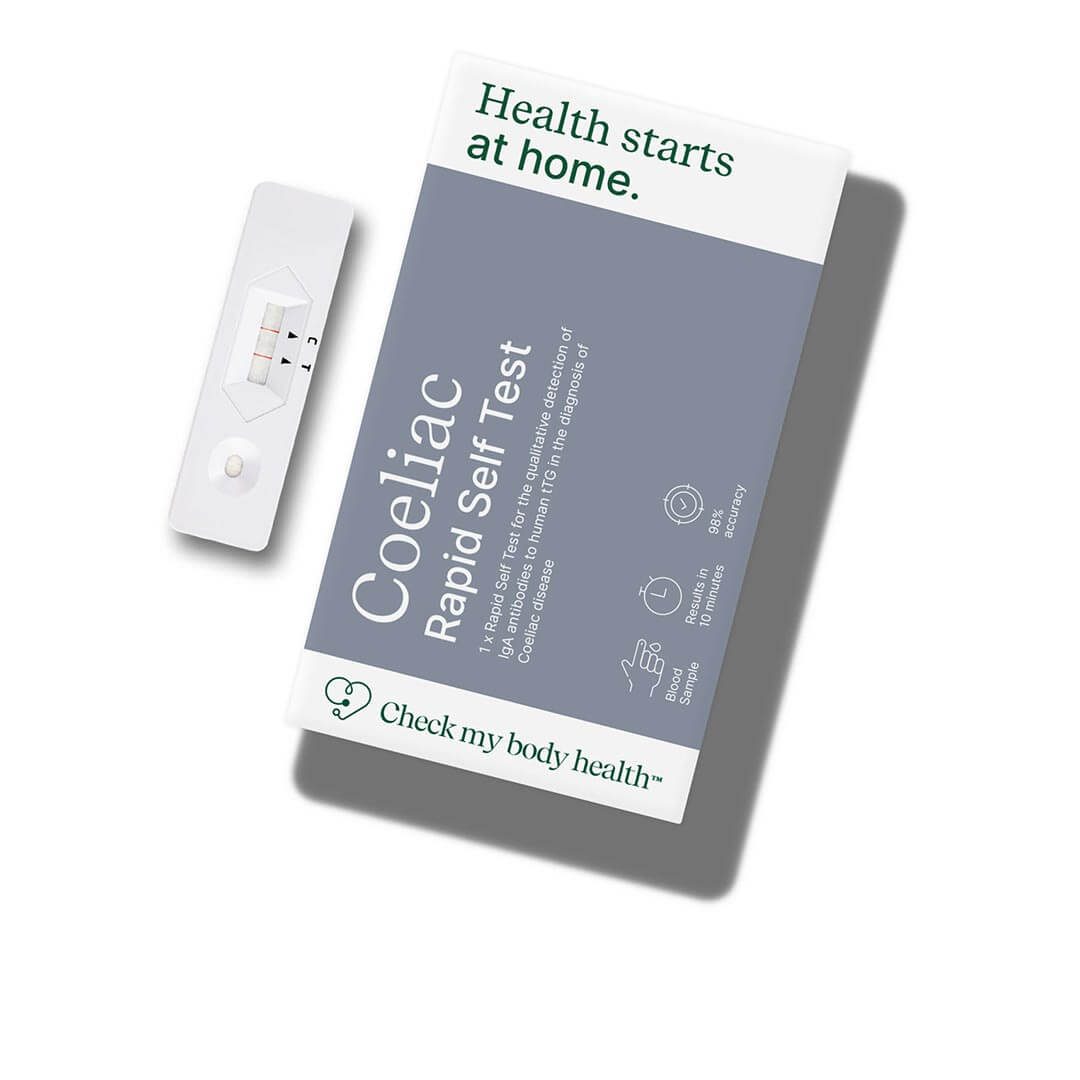
This test measures the level of transglutaminase antibody (tTG) in the blood. High tTG levels indicate coeliac disease, an autoimmune disorder in which gluten triggers an immune reaction that damages the gut and can affect many parts of the body.
Coeliac disease is not an allergy but an autoimmune disorder in which the immune system reacts abnormally to gluten, leading to the production of specific antibodies and damage to the lining of the small intestine. This can cause symptoms such as digestive discomfort, bloating, fatigue, headaches, and nutrient deficiencies.
Gluten intolerance, also known as non-coeliac gluten sensitivity, is a different condition. It can cause symptoms similar to coeliac disease, but it does not involve autoimmune reactions, intestinal damage, or the antibodies seen in coeliac disease, and there is currently no specific diagnostic test for it.
Map your digestive health today with a coeliac disease screening test to help uncover the possible cause of your symptoms. This test can be added to any of our full body health check packages. Explore our packages and book online today.
What is the difference between coeliac disease and gluten intolerance?
Gluten is a protein found primarily in wheat, barley and rye. In some people, eating gluten can trigger digestive symptoms or discomfort.
Gluten intolerance, also known as non-coeliac gluten sensitivity, is sometimes confused with coeliac disease, but they are not the same condition. Gluten intolerance does not involve an allergic response or an autoimmune reaction, and there are currently no laboratory tests that can diagnose it. Instead, it is identified by excluding other conditions (including coeliac disease and wheat allergy) and assessing symptom improvement on a gluten-free diet.
Coeliac disease, by contrast, is not an allergy. It is an autoimmune disorder in which the immune system reacts abnormally to gluten, producing specific antibodies and causing damage to the small intestine. People with gluten intolerance may experience similar symptoms, but they do not develop the intestinal damage or coeliac-specific antibodies (such as tTG-IgA) seen in coeliac disease.
What does the coeliac disease test involve?
The coeliac disease test measures levels of tissue transglutaminase antibodies (tTG-IgA) in the blood. This test can help screen for coeliac disease, but it cannot diagnose gluten intolerance, as there is no specific test for that condition.
- High tTG-IgA levels may indicate coeliac disease. A positive result should be followed by referral for an endoscopy with small-bowel biopsy, which is the definitive diagnostic test for coeliac disease.
- Normal tTG-IgA levels do not rule out coeliac disease in all cases (e.g., IgA deficiency). Additional tests may be required.
Because gluten intolerance has no biomarker, a negative tTG result does not mean gluten intolerance is "highly likely." Instead, if coeliac disease and wheat allergy are excluded, a clinician may suggest a structured gluten-free diet trial to assess whether symptoms improve.
Preparing for the test
You must continue eating gluten before the test. Removing gluten from your diet can lower antibody levels and may lead to false-negative results.
During the test
A blood sample is taken from a vein in your arm. This method is more reliable than finger-prick tests. You may feel a brief scratching or pricking sensation as the needle is inserted. The sample is then sent to a laboratory for analysis.
Description provided by Bluecrest Wellness.